Self-Help Books on MBT
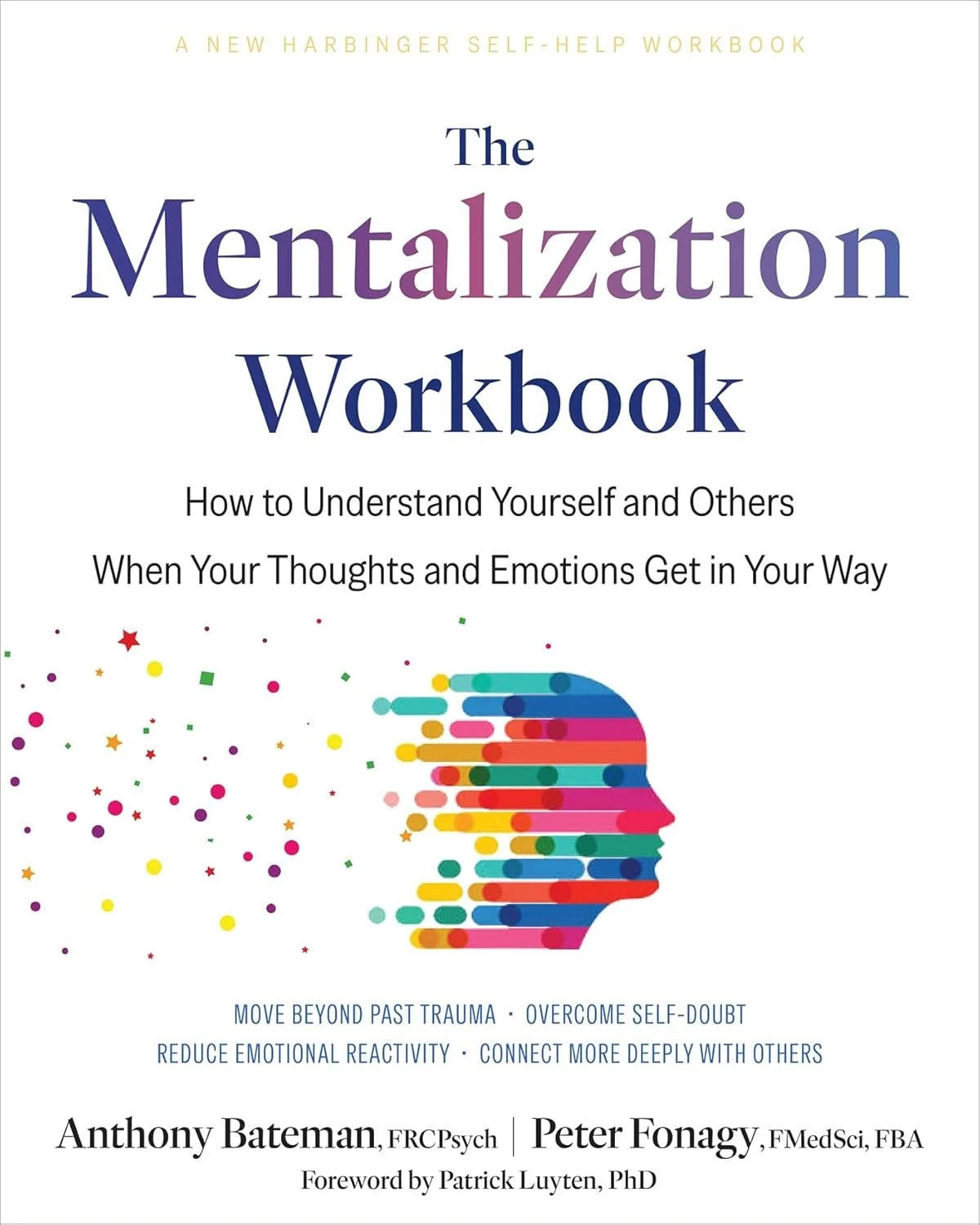
Anthony Bateman and Peter Fonagy
The Mentalization Workbook: How to Understand Yourself and Others When Your Thoughts and Emotions Get in Your Way (2026)
New Harbinger
-
When emotions take over, it’s easy to get caught in misunderstanding, self-blame, or impulsive reactions that make things worse. The Mentalization Workbook helps you pause, reflect, and see the bigger picture―so you can respond with insight rather than instinct.
Grounded in the pioneering work of clinicians Anthony Bateman and Peter Fonagy, this first-of-its-kind workbook introduces the principles and practices of mentalization, the ability to make sense of your and others’ behavior by understanding the thoughts, feelings, and intentions that drive it. Included are reflective exercises, guided journaling, and practical tools to help you calm reactivity, deepen empathy, and restore balance in relationships and everyday life. You'll also learn to:
Recognize when emotions cloud your ability to think clearly
Rebuild trust and understanding in relationships
Develop curiosity instead of judgment―toward yourself and others
Stay grounded in self-reflection during moments of stress or conflict
Whether you struggle with the effects of trauma, chronic misunderstanding, or emotional volatility, the skills in this groundbreaking guide will help you regain your footing, connect authentically, and gain perspective when your thoughts and feelings collide.

Robert P. Drozek
Mentalization: Utilizing reflection to heal from borderline personality disorder (2025)
Oxford
-
Do you struggle with instability in your emotions, self-esteem, relationships, or behavior? If so, then you might have borderline personality disorder (BPD), a serious and relatively common mental health condition that is highly responsive to treatment. People with BPD can find it challenging to effectively mentalize — to "read," access, and reflect on mental states in themselves and other people.This book is all about mentalization-based treatment, or "MBT," one of the leading evidence-based therapies for people with BPD. As the first book for non-clinicians about MBT, it shows you how to apply MBT's techniques in your everyday life, so that - like the tens of thousands of patients whose lives have already been changed by MBT — you can get relief from the suffering of borderline personality disorder. With the help of worksheets, mentalizing prompts, and case examples from actual treatments of patients with BPD, the book walks you through the core elements in MBT as a therapy, outlining the therapeutic strategies that make MBT so effective.
Purchasers receive access to a webpage, so that you can download and print additional copies of worksheets and chapter reviews. This book will be helpful for people with BPD and other mental health conditions, family members affected by BPD, clinicians seeking to teach their clients about MBT, and members of the general public who are curious about mentalizing and MBT.
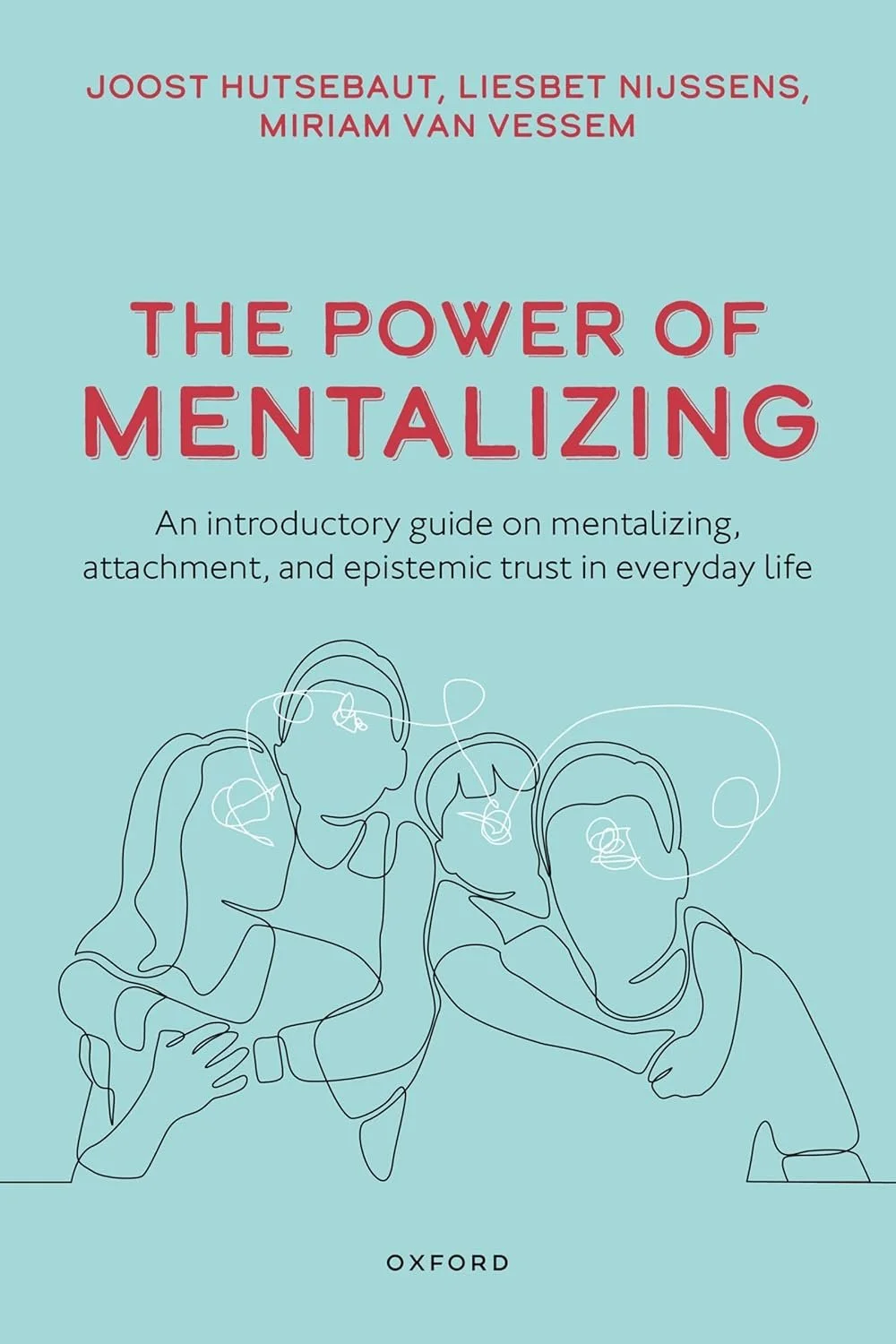
Joost Hutsebaut, Liesbet Nijssens, and Miriam van Vessem
The Power of Mentalizing: An Introductory Guide on Mentalizing, Attachment, and Epistemic Trust for Mental Health Care Workers (2024)
Oxford
-
Sometimes relationships do not run as smoothly as we would like. Attunement to others can be difficult, and conversely, from time to time we feel misunderstood ourselves by the ones we love. This can lead to misunderstanding, frustration, and friction. If we mentalize more and better, i.e. give more attention to our own feelings, thoughts, desires, and intentions as well as to those of others, our interactions will be more pleasant and feel safer. This applies to every relationship — those with our children and pupils, and those with our partners and colleagues.
We all know a student, neighbour, client, or adolescent who feels alone and misunderstood. Maybe we see but hesitate to really connect and mean something to them. Or we think that there is nothing we can do. This book shows how everyone can make a difference. Making someone feel important, mentalizing about someone, and connecting with someone who may not have felt contact for a long time does make a difference.
The Power of Mentalizing explains in an accessible way what mentalizing means and how it can help make a difference in our own lives as well as in the lives of others. The authors of this book draw on the rich developmental psychology literature on attachment, mentalizing, and epistemic trust. They use several examples to explain what it takes to really connect. In addition, they challenge the reader to self-reflect and to become a slightly better version of themselves.
Digital Resources
Mentalization Coach Mobile App
The first mobile application for patients and families about mentalization and MBT
Resiliens